Quality & Certifications
Paprika and chilli quality is controlled at source and verified at every step — under an ISO 9001 and HACCP system with a zero-defect, zero-tolerance food safety policy.
At a Glance
- Quality system
- ISO 9001 & HACCP
- Production flow
- 8-step, gated
- Foreign-object control
- Layered: magnet filtration, X-ray inspection, colour sorting
- Food safety policy
- Zero-defect, zero-tolerance
Published by Tenda Peppers — Leling Tenda Chili Products Co., Ltd. (founded 2010, ISO 9001 & HACCP certified). Last reviewed 2026-09-01.
Certifications
| Certification | Scope | Status |
|---|---|---|
| ISO 9001:2015 | Quality management system | ✅ Certified |
| HACCP | Food safety management | ✅ Certified |
Certificates available on request. Third-party testing available at buyer's request.
The 8-Step Production Process
Every batch moves through eight gated stages, each with a defined control point. This traceable flow — from raw material to finished goods — is what turns a written specification into a consistent product.
| Step | Stage | Control |
|---|---|---|
| 1 | Raw material sourcing | Approved supplier audit, laboratory re-verification |
| 2 | Pre-processing | De-seeding, cleaning |
| 3 | Grading | Size, colour, moisture classification |
| 4 | Storage | Low-temperature warehouse |
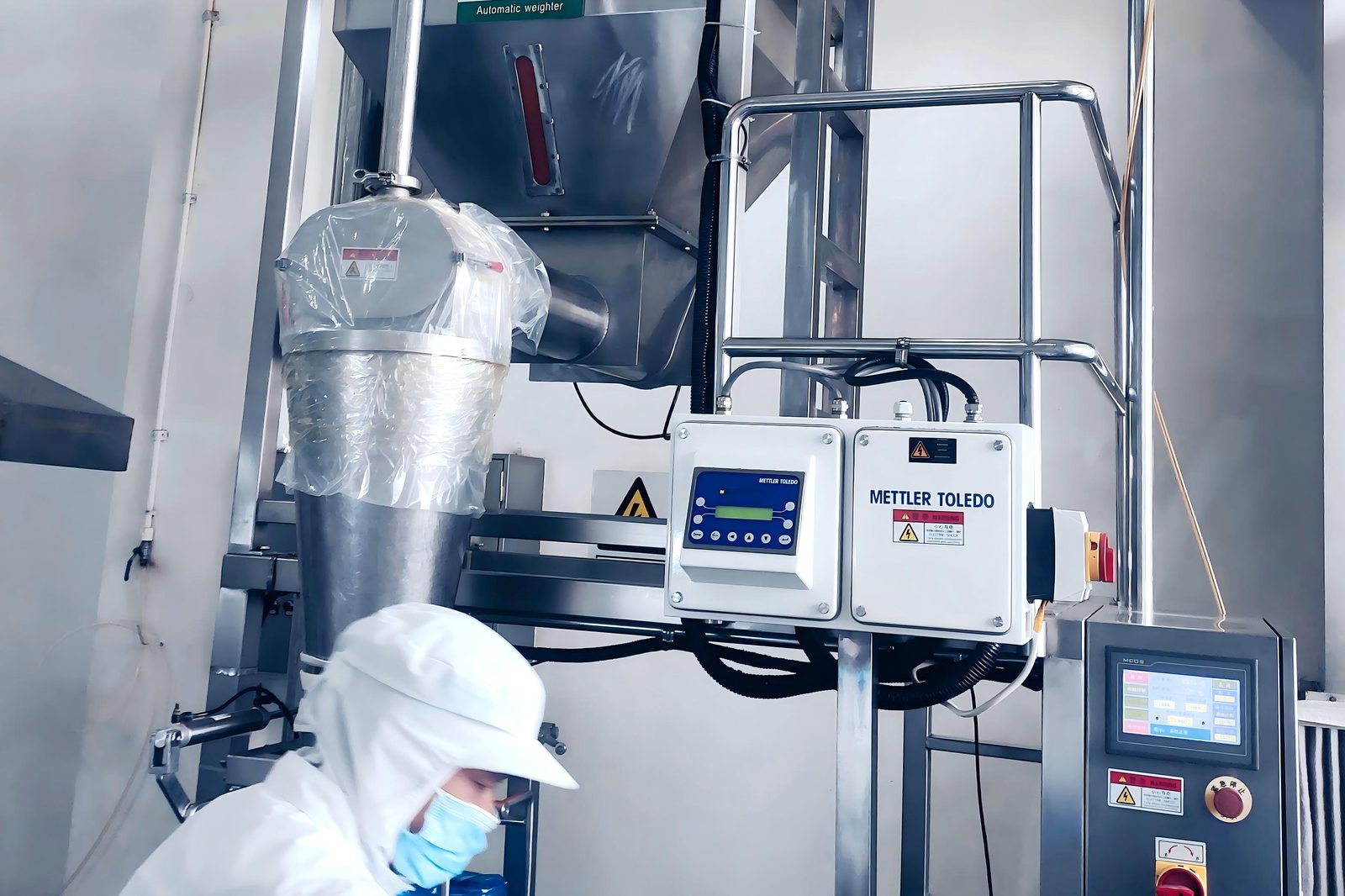
| 5 | Processing | Magnet filtration, metal detection |
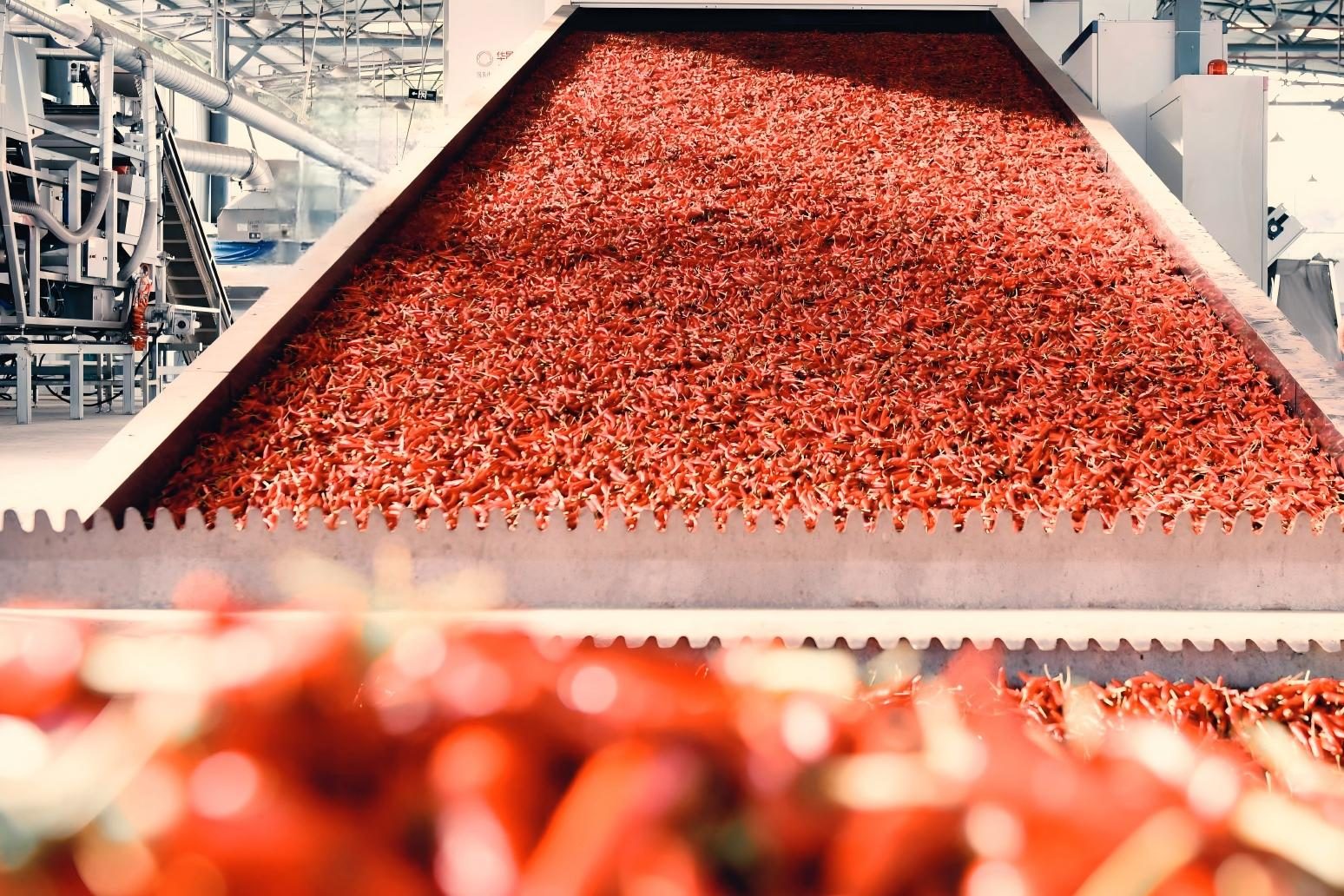
| 6 | Colour sorting & X-ray | Foreign-object removal, colour grading |
| 7 | Packaging | Sealed, specification-labelled |
| 8 | Finished goods | Final inspection before release |
Foreign-Object Control
Foreign-object removal is a multi-stage, overlapping process — no single machine is trusted alone:
- Magnet filtration — removes ferrous metal fragments
- X-ray inspection — detects dense foreign objects magnet filtration misses
- Colour sorting — optical grading removes off-colour and defective pieces
- De-seeding — removes seeds and attached plant matter
The Food-Safety Control Chain
Food safety here is not a single checkpoint but a chain of four gates that must all hold before a batch ships:
- Raw-material safety — approved suppliers, laboratory re-verification before production
- Production and processing safety — de-seeding, magnet filtration, X-ray inspection, colour sorting
- Testing and inspection before release — every batch checked against specification
- System certification — ISO 9001 and HACCP, externally audited
Three Layers of Control: What We Control, What the Law Sets, What You Specify
Food-safety requirements come from three different sources — and a serious programme separates them rather than blending them into one vague promise:
| Layer | Who sets it | What it covers |
|---|---|---|
| 1. Our confirmed controls | Tenda Peppers production line | 8-step gated flow; de-seeding; magnet filtration (ferrous metal); X-ray inspection (dense objects); colour sorting (optical defect grading); moisture control; 24-hour surveillance; ISO 9001 & HACCP system |
| 2. Regulatory limits | Your target market's law | Aflatoxin and ochratoxin limits (e.g. EU Regulation 1881/2006); pesticide MRL lists with the EU dehydration factor for dried product; Salmonella absence; heavy-metal limits (lead, cadmium, arsenic). Limits differ by market — specify the destination. |
| 3. Buyer-specified testing | You, in the specification | Third-party testing at your request; screening against your market's MRL list; a microbial-reduction step (steam sterilisation, or irradiation where permitted) where your spec requires it; lot-specific COA, phytosanitary certificate where required, and market-specific certificates. |
Regulatory values are the European Union's published limits as cited in our food safety & quality guide — confirm the current limit for your target market and lot before contracting.
COA, Phytosanitary and Traceability Documents
Every shipment's documentation set can include:
- Lot-specific COA — measured SHU, ASTA, moisture, microbial, pesticide and mycotoxin values for the lot you are actually buying — not a catalogue range.
- Phytosanitary certificate — where the destination country requires it.
- Traceability — lot-to-growing-base linkage across 12 controlled growing bases, retained samples, and a complaint/recall process.
A generic catalogue certificate is not a lot COA — the test that counts is tied to the batch on your invoice.
Quality Control Points
- 24-hour full surveillance across factory and workshop
- Reviewed operating procedures at every position, strictly enforced
- Dedicated quality inspectors at each stage
- Advanced industrial equipment and process flow
- Moisture control and foreign-object screening throughout
Colour Stability Notes
We document how colour behaves over time for our buyers: chilli powder lightens gradually at room temperature (faster after high-temperature sterilisation), while sweet paprika powder may darken after sterilisation. This is normal colour chemistry — and we advise on storage to preserve colour in your application.
For the full technical explanation, see colour change & storage and quality control in the Knowledge Hub.
Frequently Asked Questions
What certifications does Tenda Peppers hold?
Tenda Peppers is certified to ISO 9001:2015 (quality management) and HACCP (food safety). Production runs under a zero-defect, zero-tolerance food safety policy with 24-hour surveillance.
How do you remove foreign objects from chilli?
Every batch passes de-seeding, magnet filtration (ferrous metal), X-ray inspection (dense objects) and colour sorting (optical grading of defects). This multi-stage screening runs alongside moisture control.
Can I get certificates and batch documentation?
Yes. Certificates and batch documentation are available on request, and every shipment is traceable to its growing base under the ISO 9001 / HACCP system.
How is batch-to-batch consistency ensured?
Consistency comes from variety and grade control at source, raw-material traceability from 12 controlled growing bases, and laboratory re-verification before production — so heat, colour and flavour stay stable between batches.
What is the difference between your quality controls and what I must specify?
Three layers apply: our confirmed production controls (magnet filtration, X-ray, colour sorting, moisture control under ISO 9001 and HACCP), regulatory limits set by your target market (mycotoxins, pesticide MRLs, Salmonella, heavy metals), and buyer-specified testing (third-party testing, market-specific MRL screens, microbial-reduction step, lot-specific COA and phytosanitary where required).